Key takeaways
- A family of four with lamps, phones, a 12 V cooler and two hours of laptop uses about 740 Wh a day.
- A weekend of two days takes about 1,480 Wh, which a 2,048 Wh station just covers on its own.
- A 1,000 Wh station lasts about 1.2 days, so pair it with a solar panel for the full weekend.
- In Muskoka, a 200 W panel makes about 0.9 kWh a day on paper from May to July, but only about 0.35 kWh in October.
In this article
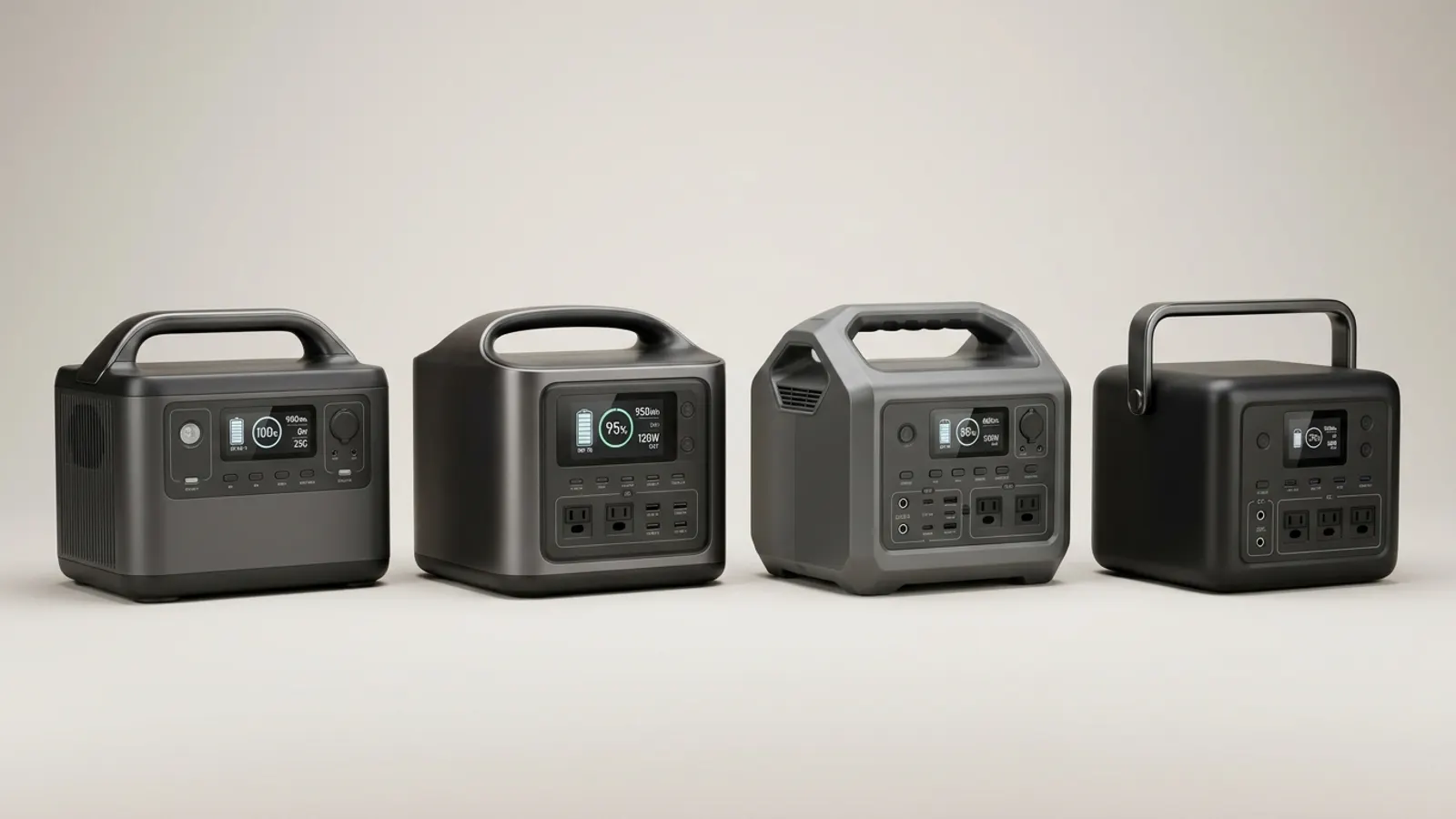
For a cottage weekend with no hydro, a family of four uses about 740 Wh a day for lights, phones, a 12 V cooler and a bit of laptop time. A station of about 2,000 Wh covers two days on its own. A 1,000 Wh station gets you there with the help of a solar panel.
Two kinds of cottage weekend
Some cottages have no hydro at all. Others have hydro that goes out in a storm, or is turned off for the season. Either way, the planning is the same: list what you want to run, and add up the watt-hours (Wh).
Leave the cottage’s own wiring alone. A station is a box you plug devices into; it is never connected to the cottage panel or to a wall outlet. Anything wired in, such as a water pump or well, is a job for a licensed electrician.
A day at the cottage, in watt-hours
Wh per day = watts × hours of use. Here is a realistic day for two adults and two kids, using our site averages and a measured figure for the cooler.
| Item | Math | Wh per day |
|---|---|---|
| 3 LED lamps in the evening | 8 W × 5 h × 3 | 120 |
| 4 phones | 10 W × 3 h × 4 | 120 |
| 12 V compressor cooler | 15 W × 24 h | 360 |
| Laptop on an outlet, 2 h | (60 W + 10 W) × 2 h | 140 |
| Total | 740 |
For the cooler, Dometic measured its CFX3 35 at 0.98 Ah per hour at 12 V with 90°F outside, which is about 12 W. We count 15 W to cover a hot porch and an open lid.
The lamps, phones and cooler run from USB and the 12 V socket. The laptop uses an outlet, so we add the station’s own 10 W while those outlets are on, and turn them off afterward.
Which station covers the weekend
A Friday evening to Sunday afternoon trip is about two days, so the need is 740 × 2 = 1,480 Wh. Usable energy is about 85 % of the battery.
| Station (announced by the brand) | Usable Wh | Days at 740 Wh/day | Weekend alone? |
|---|---|---|---|
| FOSSiBOT F2400 (2,048 Wh, 2,400 W) | ≈ 1,741 | ≈ 2.4 days | Yes |
| Jackery Explorer 1000 v2 (1,070 Wh, 1,500 W) | ≈ 910 | ≈ 1.2 days | With solar |
| Anker SOLIX C1000 (1,056 Wh, 1,800 W) | ≈ 898 | ≈ 1.2 days | With solar |
The math for the F2400: 2,048 × 0.85 ≈ 1,741 Wh, and 1,741 ÷ 740 ≈ 2.4 days. For the Anker: 898 ÷ 740 ≈ 1.2 days.
You can change the list to match your family in the runtime calculator.
What a solar panel adds, month by month
Solar is the natural partner for a cottage. PVGIS, a European Commission solar tool, gives the average daily energy for each 1,000 W of flat panels near Huntsville, Ontario. Here is what that means for one 200 W panel.
| Month | PVGIS, kWh per 1,000 W per day | 200 W panel on paper |
|---|---|---|
| May | 4.43 | ≈ 0.89 kWh |
| July | 4.59 | ≈ 0.92 kWh |
| August | 3.92 | ≈ 0.78 kWh |
| September | 2.88 | ≈ 0.58 kWh |
| October | 1.77 | ≈ 0.35 kWh |
The math: 200 W is 0.2 of 1,000 W, so 0.2 × 4.59 ≈ 0.92 kWh in July. These are averages that include cloudy days, and the PVGIS figure already allows for normal panel losses.
Real output at a cottage is often lower. Pines and maples shade the panel for part of the day, and a flat panel is not angled toward the sun. Even at half the paper value, a July panel adds about 460 Wh a day, enough to stretch a 1,000 Wh station across the weekend.
In October, the same panel brings only about a third of a kWh. For a Thanksgiving weekend, size the battery bigger rather than count on the sun. The C1000 accepts up to 600 W of solar and the Jackery 1000 v2 up to 400 W, as announced by the brands.
Carrying it down to the dock
Weight matters when the cottage is down a hill or across the water. The brands announce 10.8 kg for the Jackery Explorer 1000 v2 and 12.9 kg for the Anker SOLIX C1000. Both have handles, but a boat ride with a 13 kg box needs a dry bag and a careful step.
The FOSSiBOT F2400 holds twice the energy, so expect it to be heavier; check the brand’s page before you plan to carry it far.
Store the station in the cottage, not in a damp boathouse. Keep it off the floor and away from the wood stove.
Small habits that stretch the battery
- Pre-cool the cooler and food at home before you leave.
- Charge phones and the laptop in the car on the drive up.
- Use the station’s outlets only for the laptop, then switch them off. That saves the station’s own 10 W, or 240 Wh over a full day.
- Pick lamps with their own batteries and recharge them in the afternoon.
If a fuel generator is part of your cottage setup, the Government of Canada says to run it at least 6 metres from all homes or buildings. For more models side by side, see our comparison page.
In short
- A family cottage day with lamps, phones, a 12 V cooler and some laptop time uses about 740 Wh.
- A 2,048 Wh station covers a two-day weekend on its own.
- A 1,000 Wh station lasts about 1.2 days and needs a solar panel for the full weekend.
- A 200 W panel gives about 0.9 kWh a day on paper in early summer, but only about 0.35 kWh in October.
Sources
Questions
Can a power station run the cottage's water pump?
It depends on the pump, and most are wired into the cottage. Don't connect a station to the cottage wiring; ask a licensed electrician about a proper setup.
Can I run a fuel generator at the cottage instead?
Yes, but only outdoors. The Government of Canada says to run fuel-burning generators at least 6 metres from all homes or buildings. A power station makes no exhaust and can sit indoors.
Should I leave the station at the cottage over the winter?
Better not. Many stations won't charge below freezing, so check the temperature range in your manual. Bring it home, store it charged in a heated room and top it up every few months.
Does a solar panel work under trees by the lake?
Poorly. Shade on even part of a panel cuts its output sharply. Set it on the dock or in a clearing and turn it toward the sun a few times a day.
Stations in this article
- 2048 Wh · 2400 W FOSSiBOT F2400 Every device with the FOSSiBOT F24002,048 Wh Check price
- 1056 Wh · 1800 W Anker SOLIX C1000 Every device with the Anker SOLIX C10001,056 Wh Check price
- 1070 Wh · 1500 W Jackery Explorer 1000 v2 Every device with the Jackery Explorer 1000 v21,070 Wh Check price
How much battery do you need?
Tick your devices and how long you need to last. The calculator gives you the answer in 30 seconds.
Open the calculator